Suit Yourself or Shoot Yourself / 勝手にしやがれ!!

Katte ni shiyagare!!, 1995-1996

Mention Kiyoshi Kurosawa and films like Cure or Pulse tend to spark conversation; they are the works most often cited when his name comes up, and the point at which he became internationally associated with modern Japanese horror. That association, however, arrived relatively late. By the time those films appeared, Kurosawa had already directed more than twenty features, working since the early seventies, across a broad selection of short films, pink cinema and television, in a career that, at that point, hadn’t been defined by any particular genre.

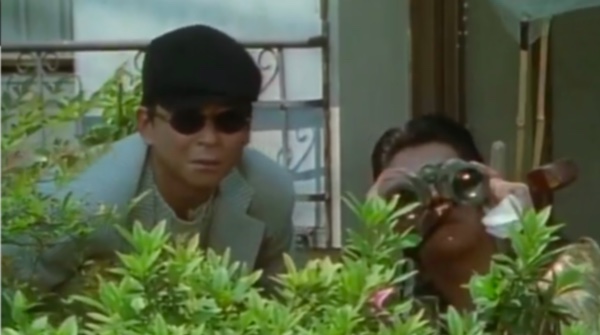
By the mid-1990s, the V-cinema boom prioritised fast production and high output over glossy presentation. Within that system, Kurosawa made his straight-to-video debut with Yakuza Taxi, a light crime comedy in which a struggling taxi firm enlists local yakuza muscle to help pay off a debt to a rival gang. It sits in clear juxtaposition to what yakuza material was expected to deliver at that time, treating the genre in a lighter way rather than taking it too seriously; Kurosawa leans into that freedom, using the project as a chance to work in a way he might not have been able to elsewhere. Still, tensions emerged between him and the original backers during production, but the flexibility of the V-Cinema market allowed those creative differences to exist without collapsing the film.

Yakuza Taxi followed a similarly difficult period after Sweet Home, a visually inventive horror film developed alongside a video game as part of a coordinated media strategy. In later years, that game gained far greater recognition for laying groundwork that would eventually feed into the Resident Evil lineage, while the film itself received a brief LaserDisc and VHS run before disappearing, though not without achieving cult status. In hindsight, it is hard not to see Sweet Home as a pivot point for the director. Whatever its virtues, the experience appears to have prompted Kurosawa to reassess both his creative direction and the conditions under which he was working. Yakuza Taxi drew enough attention to secure a more sustained run in the video market, resulting in a six-part series released between 1995 and 1996. Collectively titled Katte ni shiyagare, the films are better known internationally under the adopted English title Suit Yourself or Shoot Yourself.

At the centre of Suit Yourself or Shoot Yourself are two small-time hoodlums, Yuji and Kosaku, played by Shō Aikawa and Kōyō Maeda. They are not hardened yakuza, but competent criminals working at the margins, taking odd jobs like debt collection, intimidation and, at times, even animal rescue; whenever possible, they prefer to scare rather than resort to violence. For characters operating at this level of the criminal world, they are about as endearing as one could reasonably expect; their hearts, at least, are usually in the right place.

The series title literally translates to ‘Do what you want’, a flippant declaration that hangs over all six films and neatly captures the duo’s bravado. That anti-authoritarian posture runs through the set, even as the later entries begin to question how fully that freedom can actually be sustained.

These features rarely receive much attention in discussions of Kurosawa’s career, in part because of their limited availability and lack of Western distribution. On the surface, they look like disposable V-Cinema crime comedies. Watching them in sequence, however, you start to notice Kurosawa circling the same setup again and again and seeing what sticks.

The films are bookended in near-identical fashion, with Yuji and Kosaku riding into action on their bicycles, bells ringing, and are shot largely in and around Yokohama and the Tokyo Bay area. Locations are reused constantly, from warehouses and docks to marginal streets and industrial zones. Kurosawa would shoot two films back to back, entering production only three times to complete the series; from a financial standpoint, then, this does make a degree of sense. While you could argue that this leaves very little by way of imagination, there’s something about seeing the characters move through the same stretch of the city again and again, without much sense that there’s anywhere else to go.

Visually, Kurosawa avoids flat coverage wherever he can. Even when the camera stays still, characters are carefully blocked within the frame; long, lingering takes and tracking shots let scenes unfold without excessive cutting, giving them room to breathe. Nothing here is showy, but there is a refusal to let the work feel merely functional. Cinematographer Tokushō Kikumura, who would later shoot Cure, Chaos and Ju-on: The Grudge, returns after Yakuza Taxi, and his sensibility fits Kurosawa’s approach cleanly. The director has noted in interviews that he initially leaned towards American-influenced action filmmaking, especially in terms of pacing. Over the course of the series, that intention doesn’t appear to stick to such a model. What emerges instead are films shaped more by characterisation than mood and spectacle, with the action largely reserved for late-stage escalations; comedy dominates throughout, even when violence is present, sometimes abruptly so, it’s frequently trivialised or undercut by humour.

That said, it’s not always rosy and the series takes pains to remind us that not everyone walks away unscathed — that dealing with yakuza carries real risk. While unfortunate bursts of violence do occur, they never tip into extremity. There’s a cavalier attitude towards attempted murder and criminal consequence, and even when the protagonists are directly responsible it tends to be treated lightly, often for laughs. Money is often the catalyst for narrative collapse, through which the stories flirt with danger but rarely with consequence. Serious moments are often scored with light, almost whimsical music, and that approach barely shifts across the first five films, regardless of what’s happening on screen. It’s only in the sixth entry, as the tone hardens, that the score changes, introducing bagpipe themes that play, somewhat bizarrely, alongside the film’s turn towards politics and anti-establishment sentiment.

One way the series sustains interest is though is through casting. Across all six films, Kurosawa draws from a pool of familiar character actors and genre faces, many already associated with crime and action elsewhere. Rather than leaning on established personas, he often casts against type, using actors in ways that run against their usual screen image; the supporting cast rotates from film to film, leaving continuity with the central duo and the framework they carry with them.

Of course, the main stars, Sho Aikawa and Koyo Maeda, are great fun, and they serve as the real anchor of the series. Aikawa, coming from a background in action and genre cinema, tends to play the more serious of the two, often carrying himself with a tougher, more grounded edge, though certainly plays it up a bit. Meanwhile, Maeda, who charted success in the 80s as the leader of the pop band Otokogumi, brings a more youthful spirit to the pairing. Despite that difference, they ultimately feel like two peas in the same pod, young at heart and cut from the same cloth, their shared recklessness and easy rapport holding the films together and the children’s song which plays over each ending credits More no Kuma-san lends a little extra playfulness. 

The first film, The Heist, establishes the dynamic cleanly. Yuji and Kosaku operate under a larger figure, here a local bar run by the flamboyant Sensei, played by Ren Ōsugi, alongside the equally authoritative Yumiko, played by Yoriko Dōguchi. While carrying out a job, the pair get into trouble with yakuza and become entangled with a woman whose personal crisis draws them into a scheme beyond their abilities; romance, coincidence, money and crime collide over a brisk eighty minutes. It also features a memorable turn from Shun Sugata, striking given his reputation for fearsome enforcers; here he’s little more than a fumbling loser forced to perform toughness in order to survive.

The second film, The Escape, reshuffles the dynamic slightly, shifting the romantic focus away from Yuji towards a younger couple while keeping the central duo in place; predictably, it’s Kosaku who now becomes involved with someone connected to one of their clients, again letting coincidence do much of the work.

The third film, The Loot, is perhaps the most balanced of the six. It leans closer to a classical adventure structure, with multiple factions circling an illegible treasure map, corrupt authority figures entering the picture, and a brief sense of movement that suggests escape might actually be possible. By the end of the third entry, the pattern is firmly established, and circling back becomes the defining trait. It would be easy to read this as laziness but it comes across as if it’s merely reinforcing mundanity. Yuji and Kosaku are dreamers, and their small excursions offer moments of escape that are only ever temporary. Over time, sadness begins to underpin the films, accumulating gradually until there’s a growing sense that these characters will never catch a meaningful break.

By this point, the available opportunities have all appeared. Women enter as romantic interests, ping-ponging between Yuji and Kosaku. Obscene amounts of cash and drugs exchange hands or go missing. Gangsters intervene. People dream of escaping to another country, whether Australia, Jamaica or Bali, depending on the film. Everything collapses, but it’s treated with flippancy; happiness is framed as one lucky break away, but old habits, bad timing and structural forces pull them back into the same situation.

By the fourth entry, aptly titled The Gamble, the series begins to feel like Kurosawa testing how much mileage the setup can take. Gambling replaces ambition, while the dreams get loftier. There’s no major hook this time, beyond the heroes having free time to do whatever they please, a direct nod to the Japanese title if you will. Of course, money eventually turns up, and so does a young woman for Yuji to fall for, making for few genuine surprises, aside from a fun appearance by Hiroyuki Tanaka, better known as SABU, playing a yakuza in the same year he made his explosive directorial debut with Dangan Runner.

The fifth film, The Nouveau Rich, pushes things into outright absurdity. It opens on a violent shootout but quickly veers into slapstick, to the point where narrative logic starts to dissolve. Characters stumble through scenes like an uninterrupted Three Stooges routine. Even the duo’s work degrades into pointless labour, rescuing runaway animals rendered as stuffed toys for cheap comic effect. The villain this time, Mr Fujita, is after a dozen bags of stolen heroin and interrupts the story at regular intervals, accompanied by a rabid yakuza henchman who literally barks while being held on a leash. Despite it having all the hallmarks of a quirky anime, signs of fatigue arguably show, which becomes more telling once the final instalment comes into view. There are still laughs to be had, and Fujita’s right-hand man Sasaoka, played by Yutaka Funabiki, gets a scene-stealing run. There’s also a line delivered almost casually that comes close to summing up the entire project. Kosaku says, ‘It’s like we’ve got great cards, but we can’t lay any of them down.’ After five films, it’s hard to disagree.

The sixth and final entry, The Hero, breaks the spell however. The familiar formula is turned inside out as Yuji and Kosaku find themselves tangled up in politics. A new figure enters by the name of Aoyagi, played by Susumu Terajima, a man obsessed with justice and intent on targeting even trivial antisocial behaviour. What begins as a crusade against the yakuza shifts towards moral policing and bureaucracy, before edging into something approaching authoritarian control. Homelessness, poverty and social failure move from the background to the centre of the film.

Yuji, who has drifted through the earlier entries largely untouched by consequence, is repositioned here as a symbol. A hero imposed by circumstance, then quietly discarded. The meaning of Katte ni shiyagare is turned inside out, raising questions about what it really means to ‘do what you want’ in a society increasingly preoccupied with order, cleanliness and compliance. The tonal shift here is abrupt. Comedy recedes, and the ending is no longer playful. Time passes as the town is renovated. Residents are expected to fall into line, and the humour steadily drains away. Where the earlier entries often cushioned their seriousness with warmth and jokes, that level of safety is removed. As such, the final film is more concentrated, shedding the warmth of earlier instalments and leaving behind a more direct and unsettling look into the world these characters inhabit.

When the series reaches its conclusion, Yuji and Kosaku move on as they always have, heading into the unknown. The logic of ‘do what you want’ has always shaped how they move through the world, with a careless bravado that borders on recklessness. There’s bitterness to their departure, and an awareness that their freedom has narrowed. Even so, they charge into a hailstorm of gunfire with defiance intact, less in denial of their fate than in acceptance of it.

It’s a sober place to leave characters who once coasted on charm, coincidence and the promise of an easy escape, but the tonal shift does somewhat make sense. Like many comedies, the humour here is rooted in something more bleak, and that comes from the limits of the characters’ lives and the way the same pattern keeps repeating itself. Right from the opening of each film, you see it laid out clearly enough: Yuji and Kosaku wake up in the morning, get on their bikes, head into town, take on a job, talk about getting out of the city and going somewhere else. By the end of the day, things have usually gone wrong; money disappears, trouble follows, and whatever brief sense of escape they’ve allowed themselves collapses, leaving them more or less where they started.

That structure repeats across the series, and at first it’s part of the joke. The familiarity is comforting, even funny, and the rhythm gives the films a loose, easygoing feel. But as the entries stack up, the repetition starts to weigh a little heavier; the situations don’t really change, the outcomes don’t shift, and neither do the characters. What initially plays as comedy slowly takes on a different mood, until by the end it feels less like a running gag than a quiet acceptance that this is simply how their lives are going to keep playing out.

Taken individually, the entries are uneven. Seen together, they capture a period in Kiyoshi Kurosawa’s career where he is experimenting, working fast, and learning what can be done within tight constraints. With V-Cinema still in its infancy, the series becomes a proving ground, made before his major theatrical success, at a point when his approach was still taking shape. Kurosawa has spoken positively about the series in later years, describing it as a complete body of work and expressing some surprise at how little it is discussed. There is a sense that he views these films not as a sideline, but as a meaningful part of his development, one that may yet find a wider audience with time.

Also available for viewing on Youtube here:
Posted in Comedy | Tagged , , , , , , , , , , , | Leave a comment

Cursed /「超」怖い話A 闇の鴉

Chô’ kowai hanashi A: yami no karasu, 2004

By the early 2000s, thanks to directors such as Hideo Nakata, Kiyoshi Kurosawa, and Takashi Shimizu, Japanese horror had broken through internationally in a way nobody had expected. What set films such as Ring, Ju-on, and Dark Water apart from what Western audiences were accustomed to, was not extreme violence, but the way in which they built tension through restraint. Rather than relying on what was shown explicitly, they worked through implication, atmosphere, and the slow burn of unease. Much of their power came from what was withheld, creating an unsettling, often quieting effect that lingered long after the film had ended.

By the early 2000s, Japanese filmmaking was also undergoing a quieter technological shift. While the V-Cinema boom of the 1990s had been defined by direct-to-video distribution as a space for genre work that no longer made sense commercially, digital video was now becoming a practical option for feature-length productions. Cheaper cameras and smaller crews changed how films were shot. Yoshihiro Hoshino’s Cursed, released in 2004, sits within this period, arriving just before DV horror would become more widely recognised through later films and TV series.

Screenwriter Yumeaki Hirayama is best known as a novelist, and for his close involvement with the long-running Chô’ kowai hanashi books, a best-selling series of short horror stories. That body of work formed the basis for several low-budget screen adaptations, and Cursed, originally released as Chô’ kowai hanashi A: yami no karasu, emerges directly from Hirayama’s own writing rather than functioning as a detached spin-off. While the original title, translated as Super Scary Story: Crow of Darkness, reflects its place within the wider Chô’ kowai hanashi  lineage, the shortened English release title functions as a straightforward alternative for Western audiences and fits the context of the central convenience store’s mysterious presence.

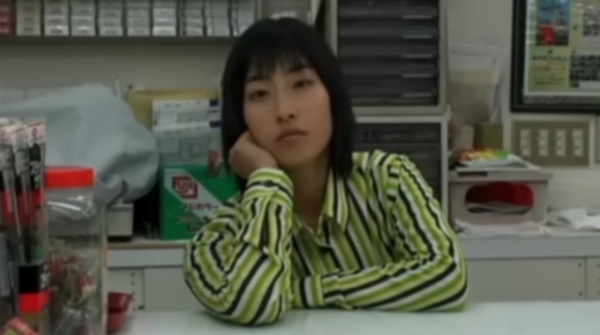
The story centres on Nao Niigaki (Hiroko Sato), who works menial day-to-day shifts as a part-timer at Mitsuya Mart, a seemingly unassuming convenience store that sits on a main road. Few customers pass through, largely due to the strange reputation the store has acquired over the years. Rumours circulate, yet the staff seem unclear about the darker secrets the public appears to know all too well. Once inside, time appears to lose any real sense of meaning, with the store existing as a sealed-off space disconnected from the outside world.

The store’s owners, Mr and Mrs Kitaura (Osamu Takahashi and Etsuyo Hirayama), watch Nao constantly from their broom-cupboard-sized stock room, keeping close tabs on her as though they expect her to steal. During the night shift, Komori (Takaaki Iwao) takes over. He harbours a small crush on Nao, which mostly goes unnoticed, though he is always willing to do her a favour if needed.

Things soon shift when a representative from Cosmos Mart named Ryoko Kagami (Kyoko Akiba) arrives for a meeting with the store owners. Her task is to secure a deal that would see the store renovated and rebranded. While carrying out a stock check, she notices that the Kitauras are keeping out-of-date goods. From there, a series of strange events follows, from odd behaviour to an increasing number of bizarre deaths. All share one thing in common: the store itself and the ground on which it stands.

Shot on digital video, Cursed recalls the work of Kōji Shiraishi, who was emerging around the same period. Shiraishi would later become closely associated with DV horror, particularly through Noroi, which Cursed predates by roughly a year. Like much of Kōji Shiraishi’s work, the film isn’t interested in spectacle. It builds its tension through atmosphere and a steady run of strange, off-kilter incidents. There are long stretches where the emphasis falls on mood and observation rather than explicit violence, even if the final thirty minutes allow for more disturbing material to surface.

It is difficult to watch the opening two or three minutes of Cursed without being reminded of the first Final Destination film, even if that resemblance is never confirmed as a direct influence. Whether intentional or not, the sequence establishes a pattern the film returns to repeatedly, settling into a rhythm shaped by small, self-contained incidents. Each is unsettling in its own way, and as the film progresses they grow more severe, though never reliant on grotesque imagery. The escalation is gradual and controlled, and very much in keeping with the broader language of J-horror.

Structurally, this can leave portions of the brisk 80-minute film feeling uneven. It drifts between incidents, following individual customers as they come and go. Over time, this approach begins to make sense. These figures are not meant to be developed or explained further. They are ordinary, anonymous, and entirely expendable within the film’s own logic.

A brief explanation for the unfolding events is eventually hinted at, tying the deaths to past events connected to the store itself. The film does not dwell on this, and any sense of resolution is deliberately minimal. What remains most effective is how much is left unclear. Cursed is at its strongest when it withholds information, reminding us that there is strength in not having everything spelled out for the viewer.

One of the more refreshing aspects of Cursed is that it doesn’t take itself overly seriously. Director Yoshihiro Hoshino allows moments of unease to sit alongside a dry, sometimes awkward sense of humour. Much of this comes from the eccentric shopkeepers and the uneasy working relationship between Nao and Komori. It’s an unusually strange workplace, quietly hostile rather than openly threatening. That tone is reinforced by the score, which relies on sharp violin strings for much of the film before shifting to a piano arrangement of Bach, carving out a memorable sequence in the final act.

In her feature debut, Hiroko Sato is quietly charming, even though her character has little influence over how events unfold around her. The rest of the supporting cast, particularly Osamu Takahashi and Etsuyo Hirayama, fully embrace the film’s offbeat tone. The way they observe Nao has an overtly voyeuristic quality, with the camera often adopting their point of view. The emphasis is on watching itself, reflecting how paranoid and withdrawn they are rather than any desire to intervene. For fans of Takeshi Miike, Susumu Terajima appears briefly as Tejima, the store owner, bringing a sense of gravitas to the few minutes he is on screen. As a long-established character actor, his presence is immediately felt, and he stands out even in a limited role.

When Cursed was released on DVD in the UK, it was marketed as being ‘in the vein of Ju-on and Ring’. From a sales perspective, the comparison is understandable. This was a cheaply made film, inexpensive to acquire during the J-horror boom, and aligning it with better-known titles was an obvious strategy. In practice, however, Cursed bears little direct relation to those films. While certain familiar hallmarks are present, they are not developed in the same way. Instead, the film plays as a cheaper-looking, more offbeat, and often quirky experiment, one that feels closer to the work of Junji Ito, particularly Uzumaki, with its focus on strange, creeping disturbances overtaking a small town.

Despite its connection to a popular horror brand, Cursed has remained something of an oddity. Its reputation has never extended far beyond its original 2004 DVD release, and it seems unlikely to receive the kind of restoration or reappraisal afforded to more canonical titles. While the Cho Kowai Hanashi books continued to circulate, the film itself led nowhere further.

What remains is a film that’s not exactly a landmark of Japanese horror. It’s strange and tonally offbeat, and largely devoid of clear or satisfying explanations. That ambiguity works in its favour. The result is a curious, self-contained film that’s been largely overlooked, but one that’s well worth your time and never outstays its welcome.

Also available for viewing on Youtube here:

Posted in horror | Tagged , , , , , , , , | Leave a comment

Hanzo The Razor / かみそり 半蔵

Kamisori Hanzō, 1972 – 1974

Based on the manga series by Kazuo Koike, who was also responsible for inspiring the Lone Wolf and Cub series (in addition to subsequently penning the Crying Freeman tales), Hanzo the Razor was a project spearheaded by Shintaro Katsu, who had formed his own production company with Hiroyoshi Nishioka at the height of the super-violent exploitation craze. By the early seventies Katsu was already a powerful presence thanks to his successful and long running Zatoichi series. Breaking away somewhat from that established mould, he set out create a series of films which would mix genre elements and appease a far broader range of tastes. The ‘Gyokiba’ trilogy, or Hanzo the Razor as they’ve become synonymously known in the west, is the fruition of his daring tirade to project sex and violence against a backdrop of political slurs: three films that are amongst the strangest you may ever see pertaining to the good ol’ Jidai-geki establishment. 

The Sword of Justice (1972. Dir – Kenji Misumi. 90 mins)

Starring: Shinataro Katsu, Daigo Kusano, Keizo Kanie,Yukiji Asaoka, Mari Atsumi, Ko Nishimura, Akira Yamauchi, Kamatari Fujiwara and Takahiro Tamura.

In The Sword of Justice, a samurai cop named Hanzo Itami (Shintaro Katsu) finds himself jaded by the work ethics of the North Magistrates Court he works for. Refusing to swear to their oath of not abusing authority, despite having entered his fourth year in service, Hanzo explains that he will not bow down to a system that’s far too corrupt for its own good, all too willingly accepting tokens of gesture from wealthy officials. His chief officer Magobei Onishi (Ko Nishimura) warns him that if his defiance continues he will face the sack at the end of his term. Refusing to give in, Hanzo sets out experience the pains of torture, so that he might come up with an ideal solution of getting suspects to talk. When Onishi catches him and his two assistants Onibi (Daigo Kusano) and Mamushi (Keizo Kanie) – former criminals who Hanzo has shown mercy upon – go through such a horrific act of bodily torture he reaches the end of his tether. Realising that he hasn’t got a moment to lose Hanzo tells his men that they’ll need to dish up some dirt on Onishi if they’re to secure their jobs. Soon the discovery of a woman with no hair down there (Mari Atsumi) leads Hanzo on an investigation involving Onishi, a secret mistress and an escaped killer named Kanbei. Plot twists ahoy as Hanzo and his giant penis set out to solve their first major case.

Director Kenji Misumi, who predominantly specialised in making Jidai-geki flicks from the mid fifties through to the mid seventies, was a long time collaborator with the Daiei Motion Picture Company, who were famed for their Gamera features, not to mention the string of successful Zatoichi productions starring Shintaro Katsu. Misumi had directed six of those features up until the point that Daiei filed for bankruptcy in 1971. From 1972 throughout ’73 he would go on to find fame with four instalments (out of six) of the cult Lone Wolf and Cub series for Toho. But before cutting his teeth on those bloody features he teamed up with Katsu once more to helm the debut outing of hard bastard cop Hanzo Itami. 

The first of three films, also distributed by Toho during the Pinku heyday, serves as a fine introduction to Hanzo Itami and the common values that he stands for. While The Sword of Justice (“sword” being a clear euphemism for “penis” as I like to think) is indeed pure exploitation, it’s important to note that underlining its acts of torture and depravity is a one-sided cynical commentary geared toward a more contemporary society which can indeed be linked to the days of old; this was all too common throughout the years in which this unique genre regularly regurgitated tales of morality as told through violent means, whether they harboured post-war sentiments or simply stood as an exact sign of the times. It’s hard to ignore the fact that The Sword of Justice readily waxes lyrical about magisterial rules, police corruption and authoritarian weaknesses in regards toward a judicial system that can’t handle the criminals it takes in. And central to these sentiments is the character of Hanzo, who despite being somewhat of an odd officer at least has a firm set of scruples, alongside his undoubtedly firm set of balls. So sets up this dominant hero who vows to go out alone and take the law into his own hands, using his own unorthodox methods in what seems to be a firm case of vigilantism. And make no mistake, Hanzo will do whatever he must to ensure the safety of the Edo villagers that he has sworn to rightfully protect in a world rife with bribery and heavy leniency. 

Of course having scruples is one thing, but they’re not always going to guarantee results, which is why Hanzo resorts to torture of the highest degree to see to it that his job is carried out with utmost efficiency. Not only does that mean he’ll gladly terrorize a few vagrants along the way, but so too will he test himself both physically and mentally, just so that he can appreciate how much pain his victims go through. Sure his mentality is rather sadistic, but he wouldn’t be quite so intriguing if it wasn’t. Hanzo takes to punishing himself on regular occasions, taking considerable pleasure in such pains involving beating his knob with a stick and thrusting it into a bag of rice, or just dousing it in boiling water depending on the mood he’s in. He gets a hard-on whenever he’s in pain and this self-abuse aids his greatest weapon, next to his trusty katana and chained sai. This instrument of justice (I’m still taking about his penis by the way) serves as the deliverer of ultimate pleasure to all fearing maidens, which is where the character of Hanzo slides into complete and utter sleaze. It’s also a bone of contention, being that Hanzo is quite the rape master, which sees to it that is moral side is certainly questionable. No woman can resist being sexually dominated by our chum Hanzo, soon finding themselves succumbing to his persuasive methods and never wanting to be let go from his libidinous grasp. Even a little S&M never goes amiss, as Hanzo whips out the ol’ bondage rope, much to the initial shock but inevitable glee of his recipient. All of this is backed by an unusual score from Kunihiko Murai who often tries to sensualise these sequences, while retaining a sleazy funk vibe: a surreal partnership formed with Misumi’s soft-focused, yet daring methods of illustrating such penetrative delights. 

But despite such crazed acts The Sword of Justice is a wildly funny feature. It’s so ridiculous in the way that it draws out its sequences that you can’t expect it to be any less satirical: the sex scenes are utterly absurd, Hanzo’s willy exercises with indented table are most amusing, and a running gag relating to Omino’s hairless crotch causing much in the way of uproarious sighs and exclamations is particularly apt. The violence, a clear precursor to Katsu’s self-produced Lone Wolf and Cub series, continues to show the film makers simply having fun with their material, with a denouement, in which despite having forced himself upon women and disfiguring the faces of many, shows us that Hanzo’s not such a bad guy after all. Director Misumi’s approach to the material is very matter of fact and to the point, showcasing some inventive stylistic choices and doing away with an epic narrative, while keeping some staple Jidai-geki traditions. This is simple, undiluted entertainment, which has enough bang(ing) for buck to please the those of us with more unusual tastes. 

The Snare (1973. Dir – Yasuzo Masumura. 89 mins)

Starring: Shintaro Katsu, Daigo Kusano, Keizo Kanie, Toshio Kurosawa, Ko Nishimura, Kei Sato, Kazuko Ineno, Hosei Komatsu, Keiko Aikawa and Masami Sanada. 

Whilst chasing down a couple of crooks, Hanzo Itami (Shintaro Katsu) and his sidekicks Onibi (Daigo Kusano) and Mamushi (Keizo Kanie) run into the path of Lord Okubo (Hosei Komatsu), the government treasurer and his bodyguard Mikoshiba (Toshio Kurosawa). They’re given a quick telling off and told not to be so careless in future. Soon afterward a young woman is found lying dead in a watermill hut, which leads Hanzo, Onibi and Mamushi to an underground abortion sect, where a crazy woman attempts to fix knocked-up girls. Quickly disbanding it Hanzo is then called to meet Okubo with the head of the magisterial office Onishi (Ko Nishimura) by his side. Okubo informs him that the escaped convict and ace thief Shobei Hamajima (Kei Sato) no doubt has his eyes firmly set on robbing the Edo mint, and he asks of Hanzo to take care of the matter. After a lecture which he doesn’t particularly wish to hear, Hanzo informs Okubo that he will not bow down to the likes of ranks and codes and sets out on his way to continue his investigation. He decides to stay at the mint, under the care of its manager Riku, in an attempt to catch Hamajima red-handed. But it turns out that there just may be some link between the treasury and a series of incidents involving young virgin girls being sold to high bidding merchants by a priestess named Nyokai. 

In The Snare Hanzo Itami continues to use his willy in solving cases, only this time it’s under the guidance of director Yasuzo Masumura, who also wrote the film’s screenplay after being directly pursued by Katsu, who knew that he could deliver the goods. Masumura, famed of course for his heavy conglomerate satire Giants & Toys and the delectable Blind Beast, amongst a host of other genre favourites, approaches the second Hanzo feature with a firm handle of what needs to be done. This naturally entails plenty of sex and fury (nice linkage there), but by utilising his own script he creates a much tighter film than its predecessor, thanks to Hanzo and his assistants having been firmly established. This means that he can dive straight into a mysterious investigation, once more fuelled by government greed and consumption. With the treasury heavily involved and poor villagers resorting to stealing, we again find a film not without socially inclined merit. However, Masumura brings his own special nature to the project, lending a little more of his cynical side and perpetuating it with bold, sometimes surreal and curiously lit imagery, with just a hint of pseudo-lesbianism thrown in for good measure. At times The Snare juggles genre elements, but effectively so, fleeting from well rooted drama, to offering light comic exchanges and even ghostly fantasy-like sequences. But then the setting is ripe for the picking. 

Here the Kaizan Temple serves as the centre stage to the action, and rest assured no woman is safe. We just know that after witnessing Hanzo starting on that rice bag ten minutes into the picture that he’s gonna end up making some sweet interrogative lovin’. Priestesses beware! That’s right, no woman is sacred when it comes to solving treacherous crime. In that respect much of Hanzo’s antics here are simply carried over from his first outing, in which he uses the same torture methods and forces himself upon women who can’t believe the size of his cock. The Snare feels more contradictory this time around, with Hanzo openly voicing his concern toward villagers who are pillaged and raped, and yet once more in the name of duty he’ll discard his generally welcoming attitude so that he may fit in a quickie at his leisure. Most prominently his taking of Riku has no real reason behind it, his excuse being quite lame as to why he does it, but with all parties coming around in the end it seems to work out quite nicely. And so The Snare does continue in the fine tradition of the first, but this time the previous training montages pay off considerably better. For example Hanzo’s self torture involving heavy stone blocks from the first feature is carried over, this time being used on a criminal, while his booby-trapped house gets to perform again and dish out a few grizzly deaths. Likewise the familiar faces from before return, with Onibi and Mamushi being used to greater comic effect (the recurring arm-branding gag being particularly amusing), not to mention the dynamic relationship of Hanzo and his superior officer Onishi, who he continually refers to as “Snake” and generally talks to him like shit, knowing that he has the upper hand thanks to some dishy secrets. As usual Hanzo’s defiance against authority and the promise that he’ll destroy all ranks and codes makes him an interesting foil next to his non-sympathetic superiors. 

But Masumura does indeed save the best for last. The final twenty minutes hosts a terrific showdown with enough tension and bite to really deliver the goods, having involved lead officials such as Lord Okubo and his accompanying bodyguard Junai Mikoshiba, who promises to one day kill Hanzo. It all naturally pays off and makes way for a nice denouement in which Hanzo carries on regardless, having reportedly saved the honour of a government he doesn’t respect. 

Who’s Got the Gold? (1974. Dir – Yoshio Inoue. 84 mins)

Starring: Shintaro Katsu, Daigo Kusano, Keizo Kanie, Ko Nishimura, Mako Midori, Mikio Narita, Asao Koike, Etsushi Takahashi, Rokko Toura, Hiroshi Nawa and Akira Yamauchi.

In Who’s Got the Gold Hanzo Itami (Shintaro Katsu) captures the wife (Aoi Nakajima) of Shogunate treasury guard Chozaburo Kato (Rokko Toura), having learned that she’s been stealing coins from her husband’s workplace. But when Kato witnesses Hanzo torturing his wife he slays her and sets his men upon the local officer, but not before informing him that the samurai have had to resort to stealing because of poor circumstances. With Hanzo doing well to dispatch of Kato’s men he is called to the magistrate’s office where he’s praised for his actions by Elder Hotta (Hiroshi Nawa) and North Magistrate Yabe. They offer him a reward, but he refuses to take one, telling them he’s disgusted by their treatment of loyal samurai who have had to resort to demeaning themselves in order to survive. He quickly goes on his merry way, but soon he’s to be caught up in more conspiracy…

…When a rebellious doctor by the name of Genan Sugino (Etsushi Takahashi) tries to inform the Shogunate that Japan must begin to take action against invading foreign fleets, he’s looked upon as a joke and is placed into the hands of Hanzo. However, Hanzo is a little more willing to hear out Sugino, who is dying from a terminal illness. Knowing that Sugino has the skills to build a cannon, Hanzo houses him for a month so that the good doctor can construct a weapon to show to high officials. Meanwhile an old friend of Hanzo’s named Heisuke Takei (Akira Yamauchi) has been teaching  Lady Yumi Hotta (<i>Blind Beast</i>’s lovely Mako Midori) how to play the Koto. Heisuke is incredibly in debt, but there is a way he can get out of it: by offering his rare spear as a bribe to Hotta. But he has no desire to let go of his treasured family heirloom, rather wishing to keep his pride as an ageing samurai. But soon heads will clash and Hanzo will find himself tangled in a complicated plot which even involves the blind priest Bansaku Tonami (Mikio Narita) and his loyal bodyguard Kengyo Ishiyama (Asao Koike).

Yasuzo Masumura left behind the directing duties for the third and final instalment of the Hanzo series, but stuck around to pen its screenplay. Taking over the reigns this time is Yoshio Inoue, who had worked on no less than nine of Maumura’s films as a first-assistant director throughout the late fifties. Straight off the bat there’s a feeling that both men wish to bring a little bit more to the proceedings. While they’re obviously contractually obliged to continue the fine tradition of providing sex and violence, the overall impact of this seems rather more watered down by comparison. By now there is a hefty air of repetitiveness in regards to Hanzo’s sexual practises, and it appears as if Inoue doesn’t care a great deal for them; he films sex scenes readily, but also shies away from any kind of overly explicit and offensive leanings, despite an orgy shared between blind men and official’s wives in one particular scene. Likewise the violence is incredibly sparse by way of bloodletting, purely sticking as much as possible to simple sword strikes and people falling over, with just a spurt here and there. It’s apparent that there’s quite a reason for all of this. Both Masumura and Inoue divert from the obvious popular nature of the Hanzo films, choosing to evenly spread out the sex and violence in a bid to firmly ground this particular tale with a proper sense of reality. As such Who’s Got the Gold? is a pleasing, if not total departure of what we’ve come to expect, and that includes, trite as it might seem, another smuggling operation involving Hanzo infiltrate a baddies’ den, along with a climactic showdown against a rather disgruntled retainer, only this time Hanzo has far more to fight for, not only in relation to the love of his country, but so too for a close friend. 

And so the biggest difference lies squarely with Masumura’s script. With a narrative involving an investigation led by Hanzo, in which samurai have been stealing recently manufactured coins from the Shogunate treasury, we witness the forming of a larger scheme. This serves to pinpoint the beginning of yet another cynical stab at social upheavals, as studied by Masumura, who now has more time to focus primarily on the matter at hand, sticking with a plot device which involves hierarchies enforcing bribes from poor samurai whose graceful age is quickly coming to an end. What leads on from this story of government corruption is a secondary plot strand concerning a notion that pertains to the collapse of the traditional Japanese way of life and the inevitably of having to conform to and potentially embrace foreign imports. Invaders, bringing steam-powered engines and powerful weaponry draw Hanzo into the wonders of advanced technology, with even he himself acknowledging its dangers, while political figureheads scoff at it. Ethics, honour and valuable codes dominate such a workable script, with highly restrained, yet focused directing from Inoue, who seeks to try and capture a sensible tone that many early examples of Jidai-geki films once established.

Furthermore, despite a lot of material here to work with in such a slight run time, Who’s Got the Gold? is filled with irreverent humour, far surpassing that seen in the instalments prior. Onibi and Mamushi are given meatier scenes, presumably because of the fun chemistry and perfect double-act repertoire shared between Daigo Kusano and Keizo Kanie, and as such they enjoy an immediate fun opener involving suspect ghosts. In addition we have the recurring branded gags and even some homosexual jabs at the expense of Hanzo, who they think may be going off women – heaven forbid! But the real scene stealer in this piece is Ko Nishimura, who returns once more as Onishi. Clearly Masumura knows what worked best in the features that came before and he sets to further explore the relationship between Hanzo and his superior. Nishimura is simply brilliant in portraying the cowardly, snarling thorn in Hanzo’s side: his comic timing and quick-witted exchanges are beautifully carried across and it’s evident that the actor relishes his role as he goes completely for broke and embraces the absurdity that his character has been bestowed. On the whole it’s the ensemble of regular faces that makes the Hanzo trilogy as fun as it is, and one gets the impression that they’d have liked to continue in some form. We certainly have an environment fit for a sitcom or drama. But it seemed that the Hanzo films did ultimately run their course, with a formula that perhaps wasn’t ever likely to change and no doubt threatened to turn into something quite tedious. Still, they’re fun while they lasted and Who’s Got the Gold? manages to go out on a high, preventing these tales from ever outstaying their welcome. 

The Hanzo features are an interesting hybrid of Jidai-geki and pure exploitation. For that reason it’s difficult to know where they stand with even the most hardened fans of period samurai tales. Their themes of corrupt systems resonate well, even after 35 years and they do indeed deliver when it comes to nasty violence. Some viewers will undoubtedly be put off by such rampant acts of bodily abuse and rape, in which the female victims don’t exactly hold grudges, but these are to be taken as an inherent part of what these films were back in the day, but more importantly they are played in quite a zesty fashion and are not quite so mean spirited as one might assume. In the end the adventures of Hanzo aren’t to be taken too seriously, but those curious in checking out Shintaro Katsu’s now legendary super-cop may wish to keep in mind of just how daring he is in pushing taste and decency beyond their limits. 

Posted in Chambara | Tagged , , , , , , , | Leave a comment

The “Pink New Wave”

When Pink Films ceased shooting on 35mm just a couple of years ago, it appeared as if the pink industry would take a massive hit; these were sure-fire money spinners, financed with relatively low budgets, filmed within a matter of days and put out quickly across a limited selection of theatres.  With companies such as Okura Pictures making just 36 features a year, it was unknown at the time just how much the newly-proposed shakeup would affect future productions, what with up to a third of their budgets now being slashed.  However, in the short space of time since the decision was made to shoot digitally, the Pink scene has not so much fallen into disrepair, but rather has managed to usher in something of a renaissance, with distribution company Pink Eiga signalling that we may well be witnessing the beginning of a “Pink New Wave”.

In light of such a declaration, this does make a degree of sense.  The shooting format for Pink Films had always allowed for a certain amount of artistic freedom to be had, as long as the required boxes were ticked off within each screenplay.  This sense of freedom clearly hasn’t changed in the years since.  Directors and cinematographers are now no longer restrained by single-takes, which was once dictated by how much film they actually had assigned to them.  Arguably, this newfound flexibility has seen filmmakers become more experimental, not only in terms of capturing unique aesthetics, but also allowing for their actors to wring out better performances.

To support this theory further, I’ve decided to take a look at three recent examples of Pink Films shot on HD formats.

In Minoru Kunisawa’s Dismembered (the barely translatable Tôsui tsuma: Hakudaku ni nureru yawahada [Ecstasy Wife: Soft Skin Moistened with Turbidity), we follow psychiatrist Takuya Kuga (a debuting Gorô Shimizu), who wakes up in an apartment belonging to a mentally unhinged young woman by the name of Aya Misawa (Ito Yoshikawa).  After learning that she drugged him, Takuya is then forcibly raped, before the lass slices off his “member” and enjoys it with a nice chianti.  Lying in his hospital bed, Takuya’s wife, Shiori (Saki Mizumi), informs him of a surgical procedure which will restore him to his former glory, and then some!  Six months later and the surgery is a success; Takuya’s willy has now reached legendary status, which in turn re-ignites a passion which for years had been thought lost.  All’s well it seems, that is until Takuya starts to experience strange visions of a woman, not only in his dreams but also throughout his day-to-day life.

Written by Yuta Takahashi, Dismembered features one of those hooks which seems so ripe for a Pink Film that it’s a wonder why we’ve waited this long to see it.  Unsurprisingly, however, given the genre’s penchant for adapting and/or parodying existing novels and acclaimed mainstream movies, here we’ve an alternative take on a story originally written by novelist Keigo Higashino, which was subsequently turned into a motion picture in 2005: Henshin, starring Hiroshi Tamaki and Yû Aoi.  While that movie delivered the prospect of a man who undergoes a life-changing brain transplant, which soon turns violent, Dismembered delivers the prospect of a man who undergoes a penis transplant, which soon turns violent.   Yes, it’s as daft as it sounds, throwing logic entirely out of the window, while going on to question whether or not love is taken at a superficial level, or truly from within. While the premise does remain light, it ticks along nicely as revelations unfold.

Kunisawa certainly brings to the film an assured sense of direction, though.  From the get-go, his 70-minute feature presents itself as if it were a fly-on-the-wall piece; almost every frame of the entire film has a guerrilla feel, whereby we’re taken through each scenario as if we were present purveyors in every establishment. There’s a subtle hand-held charm here, which occasionally blends with short dolly tricks as we follow Takuya and his wife throughout their daily activities.  Placing this to one side, the film’s direction truly comes in to its own when our characters engage in sexual activity.  Kunisawa employs every trick in the book in order to differentiate each encounter on screen; from using considerably low angles – which also strengthens bouts of tension – to shooting in as many lengthy single takes as possible, with a welcomed freestyle mentality.  It doesn’t always work; one of the weaker aspects involves a couple of spots of fellatio, shot from a POV perspective, which although very cheesy in execution, is certainly admirable.

In the first of two films for this piece from director Hideo Sakaki, 2015’s Naked Desire (Onanie Sister Tagiru Nikutsubo) (read my full review HERE), things become a little more subtle to the untrained eye.  At close to 90 minutes in length, not only is Naked Desire ambitious in stretching out its premise of a young social worker (Shou Nishino) who changes the lives of a small band of people, whose paths have converged by happenstance, but so too does it have the feel of a grander picture, one which looks as if it betrays the small budget it invariably had.  Perhaps it’s the open setting, which takes place along a seafront, where everything is quite literally bright and breezy, with natural light pouring into almost every frame.  Or, it could be the way in which it transitions from scene to scene, making its mark from the opening minutes, with confident establishing shots and skilful editing.  Whatever the case, it brings an unwavering polish to it, which engages throughout most of its run time.

Hideo Sakaki, better know for acting in mainstream hits such as Versus, Alive and Battlefield Baseball, arrived on to the pink scene a good few years after directing a number of positively received dramas for mainstream distribution.  This is a little more unusual, then, when considering that several prominent Japanese directors, who are still at the top of their game today, (Kiyoshi Kurosawa, Yojiro Takita) had their starts in the pink industry.  Perhaps then, this seasoned approached toward making Pink Films can be considered more advantageous.  Regardless, at this point there’s no real looming threat that the genre and any of its artistic integrity is showing any signs of dying out.

Moving on, Uncovered: Tales of the Naked Theatre (Samayô Ageha: Mitsu tsubo torotoro), focuses on an acting troupe named – funnily enough – “Naked Desire”, who perform classic tales such as Don Quixote and Madame Butterfly, almost completely in the buff to an audience you could count on one hand.  When the director of the troupe, Tsubasa (Ren), adds a new addition to the cast in the form of a shy novice, Ageha (Rino Mizuki), he his met with vocal discord from his entire cast, who systematically take out their frustrations on the young woman.

If the above sounds grim, well, it is.  The narrative is rarely anything other than mean-spirited – a bit of a rape-fest if you will – which means that your enjoyment mileage may vary.  Granted, there’s an inkling of a message trying to get out, but when you consistently punish your protagonist to the point that you expect her to have a mental breakdown, it’s difficult not to feel complete apathy.

Nonetheless, to keep on point, there are fleeting moments of brilliance.  The production values here can’t quite match that of Naked Desire, which was released a year prior, but then again it faces entirely different challenges altogether, which its director seems all-too-adept at handling.  Sakaki does a solid job of utilising all the tools in his kit; the inclusion of what appears to be multi-camera set-ups on few occasions (noticeably during an early gathering in which a conversation is in full bloom) provides a rare treat, while the feature’s intimate surroundings, taking place primarily at a shoddy little theatre that barely has a curtain to its name, impresses the most.  Using some creativity to illustrate the hardships of a struggling actor’s life, with simple lighting and sparse staging, it’s a solid example of making do with what you have at your disposal – a key factor given that Pink Film scripts must always be extremely budget conscious.

Unmistakably, the best part of Uncovered boils down to its final few minutes, which begins on a rooftop in the middle of the night and culminates in a twisted orgy of writhing bodies.  A crane shot leads to a surreal sexual showdown, which descends into the bowels of Tsubasa’s theatre; a disorienting series of edits, involving under-cranking and jump-cuts, not to mention the consistently bizarre scoring, does a wonderful job of playing up to this strange circus of events, so effective in its tension and unusual trickery that it almost feels at odds with the rest of the picture.

To summarise.  Is there indeed a “Pink New Wave” emerging here?  Perhaps that’s an answer which is too early to give.  While aesthetically we may no longer enjoy that “feeling” of good ol’ 35mm prints, the handover to digital hasn’t impeded the actual quality of filmmaking on offer.  In the long run this term may prove entirely accurate, as the evidence shared amongst a recent handful of pictures does paint a strong argument.  Time will tell if there are any absolutes, suffice it to say that Pink Film isn’t going anywhere any time soon, and there are always going to be thirsty filmmakers, ready to tackle any obstacles which dare get in its way.

Posted in Pink Cinema | Tagged , , , , , , , , , | Leave a comment

Dependence/ふしだらな女 真昼に濡れる

dependence

Fushidara na onna mahiru ni nureru, 2006

Chasing one’s dream, finding love under extraordinary circumstances or gaining affirmation throughout adversity, are subjects which have long been part of the cinema going experience, as we often find them serving as crutches for our own desires and fears.  Tapping into relatable themes of loneliness, parental anguish and depression, Yuji Tajiri’s Dependence (otherwise known as Forest of Virtue on home video, or the literal original title A Slut gets Wet in the Noon) tackles such issues via the most pertinent of means, resulting in a tale of welcome simplicity.

The story sees Hayato Tsukamoto (Daishi Matsunaga) return home to visit his father, Masakuni (Kazuhiro Sano), who has recently been involved in a car accident and has been cared for by a friend of Hayato’s named Fuko (Mari Yamaguchi).  Joining him is his wife, Ami (Akebi Futsumoto), who has recently endured a miscarriage and has suffered through depression ever since.  Hoping that the trip will be good for Ami’s health, Hayato encourages her to enjoy the rural landscape while she attempts to make peace with herself.  Meanwhile, he enjoys being back in the company of old friends, including Fuko’s boyfriend Daichi (Yuya Matsuura), who dreams of hanging up his farming gear and escaping to the big city.  When Ami strikes up a relationship with Masakuni, upon hearing about a beautiful waterfall situated nearby, they embark on a journey of sexual discovery, which soon threatens to destroy the foundation of their family.

Japan’s pastoral landscapes have often served as metaphorical devices on film, whether that is to aid the protagonist’s journey toward becoming a greater person; owing to remind people of where they came from, or being juxtaposed against the modernisation of society, which has required rural assimilation in order to thrive.  Dependence is a picture which takes these viewpoints in order to illustrate characters’ hardships, perhaps biting off a little more than it can chew in the process.

Although Yuji Tajiri’s intentions come across reasonably well, there’s a sense that his direction wanes at certain intervals.  While the story of Hayato and Ami appears to take centre stage, the lack of charisma shared between the two actors soon sees our focus shift to the character of Fuko, who bears much more relevance to the overall message of the film, despite her background presence at first encounter.  As the plot unravels through her eyes, this narrative evolution is made easier to digest, not only on account of Futsumoto’s stoic performance, but also through the sorry series of events that Fuko is made to suffer: from discovering the truth about what Ami is up to while keeping her silence, to being dumped by Daichi, whose father never wished for him to spread his wings.

The sense of entrapment, which overshadows the majority of Tajiri’s characters, spearheads events to a satisfying enough conclusion, using rural symbolism and maternal compassion to support any social commentary contained within, while the numerous sex scenes do their job to prolong events, however pedestrian their inclusion.

Posted in Uncategorized | Tagged , , , | 1 Comment

High Noon Ripper/真昼の切り裂き魔

darkroomfantasies

Mahiru no Kirisakima, 1984

Since making his directorial debut in 1981, having graduated from an assistant position under the tutelage of prolific pink film masters such as Mamoru Watanabe and Shinya Yamamoto, Yojiro Takita had spent the better part of the eighties building his reputation as a comical storyteller, spending much of his time with the Chikan Densha (Molester Train) series; one which served well in the lead up to his mainstream transition by 1986.

While the Chikan Densha films and those between were largely typified by their comedic bent, Takita had defined himself as being a Jack of all trades, flirting with other genre elements throughout the decade, from romance and mystery to politics and science fiction.  During the earlier part of his directorial career, however, he delved into far darker territory, notably with 1983’s Serial Rape (Renzoku Bokan): a psychological thriller starring Kaoru Orimoto in a dual role, which went on to earn some major accolades within the Pink Film industry.  Unsurprisingly then, Takita followed up this success one year later with High Noon Ripper (Mahiru no Kirisakima) a.k.a. Darkroom Fantasies for the Kokuei Company – another murder mystery owing some of its style to The Master of Suspense himself.

The story follows dedicated news journalist Noriko (Kaoru Orimoto – who also appeared in Takita’s earlier Chikan Densha: Momoe no Oshiri) and her photographer colleague Kajii (Shiro Shimomoto, S&M Hunter), who pair up when they attend a grizzly murder scene involving the stabbing of a young female.  Presenting their unsettlingly detailed shots to their editor (Pink Film legend Yutaka Ikejima), they are quickly encouraged to go out and find more in order to boost the reputation and sales of the magazine.  Due to the sexual nature of the crime, however, Kajii is reminded of a previously published photo he saw in a magazine, belonging to a young man by the name of Shun (Toru Nakane), who happens to reside in the local area where the crime took place.  As the murder spree begins to escalate, Kajii, his girlfriend (Usagi Aso) and Noriko find themselves in a desperate race to get answers.

Opting to target media sensationalism as part of a backdrop for its nasty narrative, Yojiro Takita, along with his screenwriter Shiro Yumeno, creates a suitably dour whodunnit, whereby obtuse visual metaphors and trenchant sound design works in tandem to ensure that the viewer is left guessing right up to the moment it reveals its final hand.  The unnerving atmosphere, which sees our protagonists at constant loggerheads – whether it be due to the clashing of egos or sexual politics – is maintained at a leisurely pace, utilising voyeuristic framing devices and a clever usage of edit wipes to maximise the efficiency of both its shifting perspectives and its incumbent sex scenes.  Takita relishes the opportunity here to pay homage to some of Hollywood’s greats; a nod to Psycho, for instance, may lack subtlety but its execution is nonetheless effective and would go on to see the director continue to reference western cinema in subsequent pink outings.

Within its sixty minutes, High Noon Ripper does well to reveal different sides of our protagonists in an effort to show that nothing is ever quite what it appears to be, as it flits between cycles.  By day, Noriko is a fierce go-getter and by night she’s a perpetually horny and vulnerable lass, pleasuring herself with whatever household object is within reach.  Meanwhile, Kajii is all about the shoot and dedicated to a deadly fault.  These elements do have natural payoffs, along with a supporting dichotomy which stretches between the picture’s vacant urban landscape and that of its claustrophobic depictions of dimly-lit offices and compact apartments.  Any misgivings to found here are largely down to the director’s enforced sex scenes: one shoehorned encounter in particular – a late night office dalliance – serves little more than padding, while Takita’s slight penchant for comedy in the form of a chase sequence backed by chirpy jazz, does feel somewhat at odds with the rest of the film’s tone.  Otherwise, High Noon Ripper is a welcome entry into the director’s oeuvre and part of a genre which he, unfortunately, rarely revisited in the years since.

Posted in Uncategorized | Tagged , , , , | 2 Comments

Naked Desire/オナニーシスター たぎる肉壺

nakeddesire.jpg

Onanie Sister Tagiru Nikutsubo, 2015

With Japan continuing to find itself troubled by increasingly low fertility rates and high life expectancies, its government has scrambled over the years for solutions to its current population crisis.  As recently as 2014, it was reported that a quarter of the country’s citizens was made up of those over the age of 65, with an insufficient social care system in place to better cater for elderly needs; concurrently, many able-bodied pensioners still work well over the intended retirement age in agricultural and other general labour sectors.  Given the inevitable increase of government spending on care services, its welfare infrastructure has recently come under review once more, as it was revealed earlier this year that the country will require as many as one million qualified personnel for such an undertaking.  With many carers being seniors themselves, Japan has sought help from other Asian territories such as Indonesia and the Philippines, to provide younger professionals in the field and thus perhaps negate the need for expensive Carebots.

The contemporaneous concern amongst charitable organisations – whereby more and more elderly illness sufferers are quite literally dumped on the doorsteps of hospitals due to financially-burdened families or otherwise – provides additional context for Hideo Sakaki’s 2015 Naked Desire (aka Onanie Sister Tagiru Nikutsubo), featuring a framework which certainly has a lot to say about the nation’s modern climate.

The story stars Shou Nishino as Kayoko: a former care giver who wakes up naked on a seafront hillside, after what you could say was a rough night out on the town.  Eventually stumbling upon a quaint-looking beach house, which she enters without an invite, she’s soon introduced to a sister by the name of Akane (Gravure idol and singer Ui Mita), who accuses her of being a thief.  This misunderstanding is soon played down by the uninhibited and vivacious vixen, who quickly learns that Akane is caring for an elderly gentleman and former social activist by the name of Mr. Yamanami (Shigeru Harihara), who has been abandoned by his family.  Opting to stay at the house and help care for Yamanami, they’re soon interrupted by the arrival of another party: school teacher Rina (Yusuyo Shiba – The Wolverine, Man from Reno) and her student lover Shinji (Yuta Kogiri).  meanwhile, hot on their trail is a trio of police officers (played by Tadashi Mizuno, Mataro Umeya, and Ayumi Tamiyama), who have been tasked by family members and the school board to bring home the runaways in an attempt to save them from humiliation.

With pink cinema serving as a budget-conscious battleground for sociopolitical observations, it comes as no surprise here to see actor/director Hideo Sakaki (yes, he of Versus, Alive, Azumi) utilise the genre as a springboard for the similarly pertinent commentary his earlier films have been known for.  Specifically, his 2008 feature debut My Grandma (Boku no Obaachan) and 2012’s A Drop from Tomato (Tomato no Shizuku), both told the importance of rekindling family bonds and caring for those through daily hardships, while detailing the importance of communication, all under the security of sentimentalism and cartoonish behaviour.  With screenwriter and acting A.D. Koichi Miwa (who also appears in the film as a creepy old man who bribes Rina with covertly shot videos in exchange for sex), the pair bring to the fore a subject which does enough to resonate within the confines and constraints of the format, while managing to find the time to throw in a subplot about the devotion to one’s faith, its effects on how we perceive human desire and what denotes true misappropriation of a solemn vow.

Enter Shou Nishino, who acts as the films central voice of reasoning; whose outlook on life simply boils down to being able to enjoy it regardless of bodily restrictions and pre-judged assumptions thrown our way.  Her mantra of “No sex is no life” – stamped upon a shirt she dresses Yamanami in – is not unlike that of the character Sakura, from Yutaka Ikejima’s celebrated The Japanese Wife Next Door and its sequel, in which the idea of sexual therapy provides suitable ammunition for a tale of repressed passion.  Nishino brings to the role a lovely sense of free-spiritedness and cheeky authoritarianism; she’s a mysterious entrant, with an angle that Sakaki admirably keeps under wraps for much of the feature’s early portion, building into a well-rounded figure whose influence on others proves to be a positive factor when pitted against taboo boundaries which aren’t strictly meant to be crossed.  Arguably, the subplot of Akane wrestling with her devotion to Christianity, coupled with imagery of her releasing pent-up sexual frustrations, remains a tricky subject, but nonetheless, it harbours a deeper sentiment which holds a certain sense of subjective reasoning.

Compared to the average run time of a pink film, Naked Desire’s 87 minutes may seem enough to justify the presence of its various themes, with a fairly large ensemble given the reigns to fully liberate themselves on screen.  With an impressive roster, all of whom commit enjoyable performances, Sakaki maintains, for the most part, a well-measured comedic tone, backed by consistently strong sexual encounters; however, an uncomfortable – for all intents – rape scene, does threaten to spoil proceedings somewhat.  As events shift between the central household and that of our bumbling officers’ investigation, moments do waver from time to time: the cops’ sub-story features its share of padding, with encounters that don’t lead to anywhere worthwhile, while the brazen sexual buffoonery shared amongst them – and in particular toward that of Ayumi Tamiyama’s hapless female officer – is bizarre to say the least, only being remedied by her deadpan delivery.   Likewise, the film’s climactic event is slightly undermined by a revelation of sorts, when Yamanami enjoys a biblical-like rejuvenation, which finds itself juxtaposing political activist slurs from a bygone era and a strange sexual liberation which disbands our core cast beyond initial expectations.

Braving some serious subject matter, while retaining a welcome comical presence, Naked Desire is overall an enjoyable sex romp with good production values, a committed and likeable cast and a sense of conviction which dares to challenge its audience.


Posted in Uncategorized | Tagged , , , | 1 Comment

Sweet Home/スウィートホーム

sweethome

Suito Homu, 1989

Prior to Kiyoshi Kurosawa achieving international recognition with 1997’s Cure, it’s important to note the transitional period in his career, which saw him go from directing Pink Eiga features during the early part of the 80s, to becoming ostracised by the studio system on account of his maverick sensibilities, which ultimately led him into the realm of V-Cinema throughout much of the following decade.  Kurosawa had already clashed with studio heads early on when he bought the rights to his unreleased pink film, College Girl: Shameful Seminar, an outsourced Nikkatsu production which was shelved in the wake of his debut feature, Kandagawa Pervert Wars, failing to earn the enthusiasm of pink film studio, Million Film. His second feature, then, renamed The Excitement of the Do-Re-Mi-Fa Girl in 1985, involved heavy reworking and, upon initial release, was met with warm praise. By this point, however, his associated ties with leading Pink cinema studios were all but severed.

By the time that 1988 rolled around, Kurosawa had been approached by Toho and his friend and prolific actor/writer/director Juzo Itami (who has starred earlier in Do-Re-Mi-Fa) to direct a horror feature for theatrical consumption.  The plan was to work alongside video-game developers Capcom, concurrently, in an effort to mutually benefit one another via the simultaneous release of both mediums; the game ended up hitting shelves in time for Christmas ’88, while the film followed one month later. Kurosawa would write and direct the feature, which Itami oversaw as producer, while the celebrated Tokuro Fujiwara (Ghosts ’n Goblins, Bionic Commando) would hawk over the film’s development to create what would become one of Nintendo’s most obscure treasures never released outside of Japan – a survival game like nothing before it, which would later evolve into of the most enduring video-game franchises of all time: Resident Evil.

Controversy struck Kurosawa again, when it was learned that Juzo Itami later intervened with the film’s structure, by reshooting certain elements in the lead up to its home video release; Kurosawa would publicly go on record to voice his displeasure with the move, which saw him file a legal complaint. The ruling went in Toho’s favour, however, and Kurosawa reportedly fell out with Itami, removing his name from the feature and leaving behind a piece of work which didn’t end up suiting his original ideas quite so fittingly. Yet Sweet Home [lit. derived from Suito Homu) isn’t all doom and gloom, in fact it’s a highly entertaining slice of J-Horror, reminiscent in many ways of Nobuhiko Obayashi’s 1977 debut Hausu, with its often sunny disposition, creative visual effects and juxtaposing themes of familial bonds.

The plot sees widowed Producer Kazuo Hoshino (Shingo Yamashiro, Battles Without Honour and Humanity) arrive at a small community, as a member of a documentary crew hoping to uncover more tales about the town. His main goal, however, involves trying to obtain access to the Mamiya Mansion: once home to famed artist Ichirou Mamiya, who died there thirty years ago and left behind a series of frescos which have since become the thing of legend. When Kazuo is granted access, he heads to the site with his crew of three (Ichiro Furutachi, Nobuko Miyamoto and Fukumi Kuroda), alongside his daughter Emi (singer-songwriter Nokko). Together, they ascend into the derelict mansion, soon learning the disturbing secrets behind the death of Ichirou and unwittingly disturbing the spirit of his departed wife, which will soon prove fatal for the unsuspecting team.

When sitting through Sweet Home in its officially released home video guise, there’s a distinct impression of a film which is attempting to marry western sensibilities with that of an intrinsic belief system.  As a film designed for mass mainstream appeal, given the impact of Japan’s huge gaming sub-culture and the rise in home video distribution, its frantic style is one well suited to a time when Hollywood action and horror tropes were filtering through the market.  Similarly to how Toho required Nobuhiko Obayashi to create a film to rival the likes of Jaws’s popularity over a decade prior, here we have a feature which not only takes cues from OB’s Hausu, but also finds itself harking back to an era during which western horror cinema was creating its own waves.  The interest in studios such as Hammer and American International Pictures during their heyday, had previously influenced other notable Japanese horror features; one only needs to take a gander at Michio Yamamoto’s Bloodthirsty Trilogy for Toho (1970-1974) to see such an example of how European cinema impacted this shift.

And so, Sweet Home does find itself nestled comfortably between western and Japanese tradition, with a narrative which is arguably derivative but functional in its simplicity. Adding to the crossover appeal is the employment of Academy Award-winning make-up effects artist Dick Smith, who, alongside other greats such as Etsuko Egawa and Kazuhiro Tsuji, brings to the fore an incredibly inventive aesthetic, which leaves behind some particularly memorable scenes. It’s suggested that Juzo Itami (who also co-stars in the film as a whisky-swilling, expository aid, who winds up singing a ditty to a bottle of alcohol) had a great hand in how the film ultimately found its pacing, but it’s to no detrimental effect here, with a brisk runtime which never outstays its welcome.  Once the Sweet Home’s revealed curse gets underway, the inventiveness on display is nothing short of impressive; gore kills are satisfyingly realised with sharp editing, while the film’s more enticing use of shadow-play is something which could easily become attributed to Kurosawa’s later acclaimed works. What we end up with is a dramatically unnerving experience on account of just how well these techniques are realised, with the conviction of psychological terror over the more visceral, for which Japan has always reigned supreme.

Despite any reports of post-tinkering, then, Sweet Home retains all the necessary hallmarks of Kurosawa to suggest that his overall message isn’t entirely extinguished. The film is set up in a jovial manner, with a soundtrack and sense of humour which maintains consistency throughout, but just as systematically as the picture strikes down half of its core cast, it also expresses clear parental issues as it denotes the importance of coming of age and moving on in life. The playful dynamic shared between father and daughter delicately helps to explore such subject matter as loss and finding new love, with Kurosawa’s original script introducing another key member in Akiko, played by Juzo Itami’s wife, Nobuko Miyamoto. Kurosawa’s strength here is that he doesn’t simply make his female protagonist the archetypal damsel in distress/love interest, but rather reveals Akiko to be a strong, independent woman, who in fact can be attributed as being one of the film’s central heroic figures. Just as Kazuo’s arc from being a timid father to self-sacrificing soul is well handled, so too is Akiko’s journey toward finding a resolution, which leads to a heart-wrenching, yet uplifting denouement on motherhood, bolstered by some expressive puppetry effects and an ideology that has befitted the best of Japan’s ghostly offerings.

Due to the nature of Sweet Home’s trial, the film was never again released on home video formats. To this day, Kiyoshi Kurosawa’s original cut languishes within the vaults of Toho, waiting for the day to be unearthed and presented in its original glory. Given the pedigree of the film and its influence on modern gaming pop-culture, it’s with hope that one day a new audience will rediscover it.

Posted in Uncategorized | Tagged , , , , , | Leave a comment

Evil Spirits of Japan/日本の悪霊

evilspiritsofjapan

Nippon no Akuryo, 1970

With a financially burdened Kazuo Kuroki, having finally found a home of sorts with the Art Theatre Guild, Evil Spirits of Japan [Nippon no Akuryo, lit. ‘Demon Spirits of Japan’] marked his directorial debut with the company – a production, which common enough for the studio, saw them front half of the film’s reported 10 million yen budget, leaving the director himself to hustle for the rest.

Filmed as a period piece, Evil Spirits of Japan is very much entrenched in a modern sensibility. Released barely ten years after the real life movement which inspired it, it’s a film whose origins lay with a novel written by Kazumi Takahashi (the Dostoyevsky-inspired title adapted here by Yoshikazu Fukuda), himself a vocal supporter of the student movement of the sixties, in which the ‘Treaty of Mutual Cooperation and Security between the United States and Japan’ sparked violent protests across the nation.  Shot under harsh conditions, in which the director and his crew even struggled to see a good meal, the result is a raw but tight Gendai-geki, which traverses contemporary sociopolitical themes to present a largely unsung Yakuza tale of much prominence.

The fairly straightforward plot sees a yakuza bodyguard by the name of Murase (Kei Sato – The Human Condition, Onibaba) stroll into a town situated within the Gunma prefecture, which is currently serving as the battleground for a violent conflict between two yakuza families – the Kito and Tenchi. When Murase arrives at his digs, expecting to be greeted by a female bar hostess (Eiko Horii) who has been assigned to him by the Kito group, he discovers that she’s already in bed with another man. That man is Ochiai (Kei Sato) – a police detective with eighteen years on the force and a former student activist, who happens to bear an uncanny resemblance to the yakuza member. Seizing an opportunity for his own gain, Murase forces Ochiai to swap identities, which eventually leads Murase to investigate a murder case dating back to a time in which Ochiai belonged to a militant group. As Murase effortlessly infiltrates the police force and finds himself settling in nicely, so too does Ochiai find some sort of comfort in the dubious acts he partakes in. Confronted by ethic and moral questions, both men will inevitably find themselves spiraling toward a path of self-destruction.

With Kazuo Kuroki’s previous feature, Cuban Lover, failing to leave a lasting impression at the box office and plunging production into debt – later seeing Kuroki hounded by loan sharks and yakuza – Evil Spirits of Japan is a heartier attempt at bringing both the director’s artistic sensibilities and personal struggles to the forefront of a modern thriller.  On the face of it, his picture might not seem revelatory in a sense that part of its fundamental goal is to highlight government corruption, yet any predictability in its message is far outmatched by its aesthetic trickery and surprising humour.

The documentarian, freestyle approach of which Kuroki had honed during his early filmmaking years throughout the late fifties to early sixties, assists well as a means to explore a chaotic narrative coloured by shades of grey; its political bent, which echoes parts of the director’s late youth, is presented in stark monochrome, with Murase and Ochiai’s contrasting black and white attire illustrating a simple dichotomy of the feature’s themes as it tackles a nation’s crisis of identity, along with showcasing the dubious hierarchical system which makes up the fabric of  its being. Kuroki’s camera is often found lingering on scenes, soaking up the general malaise of the time, while occasionally focusing on a hopeful society which looks upon the lens to remind us of an often organic process at play. Moments such as this are bolstered by some fitting figures from other parts of the Angura [underground] scene, perhaps one of the more unlikely notables being the “God of Folk” himself, Nobuyashi Okabayashi, who undercuts the tale with several songs, which just about border on the unsubtle. In its context, however, the singer-songwriter, whose protest writings provided the voice of a disillusioned generation whilst leaving broadcasters on tenterhooks, works in highlighting much of the absurdity on display, with his wall-breaking turns aiming to subvert expectations in what becomes a picture that relishes the opportunity to lampoon some of Toei’s already successful Ninkyo eiga [chivalry films] productions.

Kazuo Kuroki’s tale is ultimately a confident debut with the ATG; a film with some startling motifs, which symbolise concepts of good and evil, crime and punishment and sexual desire via more unconventional patterns, while serving as a precursor for many of the great Doppelganger movies to come.

Posted in Uncategorized | Tagged , , , , , | Leave a comment

A Man Vanishes/人間蒸発

amanvanishes

Ningen Jōhatsu, 1967

To understand the significance of Shohei Imamura’s A Man Vanishes [Ningen Jōhatsu, 1967], one must first have an understanding of the reason behind its genesis.  Perhaps the most consistently alarming aspect of Japanese society today – and indeed for the best part of half a century – has been the rate in which its citizens have simply vanished into thin air, with a statistic of 100,000 per annum being roughly estimated.  Compared to Japan’s unusually high suicide rate – one of the largest in the world – which makes up just 0.1% of that sum by comparison, it’s easy to place such a terrifying prospect into far greater context.

Commonly referred to as “Jōhatsu” [lit. Evaporated], it’s often believed that these people simply disappear of their own volition, leaving behind only frustration for their families.  The reason behind these orchestrations can only be looked upon at a speculative level – whether they were owed to circumstances such as divorce, severe debt, job loss or fear of failure, the leftover result is one which stirs feelings of anger and befuddlement; a sense of hopelessness which is only heightened by how the police force chooses to investigate missing persons cases, many of which are terminated on account of just how “successful” the victim has been in never wanting to be discovered.  Few cases, for whatever reason however, are not always reported, perhaps in part due to the shame that such an act brings upon the family.

Entering the scene barely two decades after the events of World War II, from which Japan as a nation was struggling with a great sense of disgrace and was rebuilding itself from the ashes, A Man Vanishes also came during a timely period in which the Art Theatre Guild – which was initially established to distribute foreign and domestic arthouse cinema – ventured into producing their own features in a bid to help out struggling artists, whose visions would often be at odds with that of the industry’s major distributing houses.  The ATG itself was born from years of national turmoil, which saw Japan enter a period of student uprisings as unions voiced their concerns over the Anpo treaty, designed to see the United States commit themselves to help defend Japan in the case of future conflict; a by-product being that the setting up of U.S. military bases would breed social paranoia. This was but the beginning of a decade-long struggle, which saw student groups go on to oppose other conflicts happening within their homeland and overseas – and the ATG would be there every step of the way.

The Art Theatre Guild, then, would ultimately serve as an axis for vocal and talented filmmakers; the co-productions themselves would see the ATG front half of the bill, while the director would have to get creative in mustering up the rest.  These were typically known to be 10,000,000 yen productions and while for a director to have to split the budget down the middle seemed unorthodox at the time, it meant that the payoff resulted in having carte blanche.

Director Shohei Imamura had already amassed a respectable reputation for himself, thanks to features like Pigs and Battleships and The Pornographers earning himself western recognition; his desire to uncover more secrets within Japan’s underbelly, however, saw him move toward a more documentarian approach, resulting in him collaborating with the ATG for his inaugural feature with them.  The intentions behind A Man Vanishes are sincere enough, with Ishimura initially having set out to document the disappearances of twenty or so citizens, only to soon realise that such an undertaking would be far too ambitious a feat.  Instead, the director chose to focus on just one case: a man by the name of Oshima Tadashi, who vanished without a trace, leaving behind his grieving parents and his fiancée, Yoshie Hayakawa, who had searched desperately for almost two years until being contacted by the director.

There is something futile from its ominous tone to suggest that A Man Vanishes won’t culminate with a sunset denouement, presenting the realisation that nothing is ever simply black and white, with areas so grey that it will forever remain an enigma in Japanese cinema.  What starts off as an earnest attempt to portray a fractured soul raised by a humble upbringing, soon subverts itself to all-out character assassination, as through various interviews with Tadashi’s parents, colleagues and formally betrothed, we’re painted a portrait of a kind, yet self-conscious man with criminal tendencies, who shunned a society that had tried to help him. Or did it?

Ishimura’s film, for all its determination to uncover the truth behind Tadashi’s disappearance, is one which perhaps unwittingly reveals more about the human condition than it may have set out to achieve.  As the investigation moves between street vendors and the family domicile – to which things become so hopeless that spirit mediums are called in to solve a riddle which should ordinarily come down to basic logic – A Man Vanishes does more to overshadow its initial subject in the way it tests the will of the human spirit; how it dissects the core being of its players to reveal certain truths, personal fears and concerns, which inevitably exposes deep flaws under the surface, thus forcing the viewer question just what it is that we can really bring ourselves to trust.

Nothing is more relevant than in seeing Ishimura’s star player, Yoshie a.k.a. “The Rat”, at work. Taking to the streets with actor Shigeru Tsuyuguchi by her side – here, covering for the film’s director in order to maintain credibility – the stone-faced jilted one becomes less of a sympathetic heroine as much as she does a defiant voice in contemporary society.  As theories begin to escalate and tension rises upon the discovery of a body which bears an almost uncanny likeness to that of Tadashi, the unravelling of Yoshie’s psyche creates an unintentional commentary on Japan’s patriarchal system, when the investigation turns to her own upbringing.  Ishimura, having spent the best part of a year working with Yoshie, saw over time that she was a character all to herself and as such she becomes the feature’s main thread by the time it hits its midway point.  Peeling away the layers, we begin to witness what was once a timid women in front of the lens now transforming into an outspoken individual who refuses to be subservient to the antiquated ideology that society dictates, much to her eventual undoing.  With the interaction between her and sister Sayo – a rather pitiful lass who is referred to by the crew rather unfairly as “The Witch” and is often spoken about as if she’s not even in the same room – it becomes an almost villainous transition as we discover through her family that Yoshie was always a hardened spirit who wasn’t averse to bullying others and getting her own way. Could she have even been the catalyst for Tadashi’s disappearance?

This revelation is perhaps what makes A Man Vanishes the conundrum it is, given how Ishimura resigns himself to the notion that truth can be stranger than fiction, and in doing so restructures the documentary to to fit an alternative way of processing questions raised earlier.  Provoking Yoshie and her sister with personal questions at times, which only goes on to create further hostility between them, Imamura’s conspiracy theories concerning a family plot centred around the whole sorry ordeal constructs a surreal narrative, which is compounded by his growing suspicions of Yoshie and her own motivations, whether they be boosted by the idea of fame and general attention or indeed whether she’s merely exhausted her options and hopes to create a new start in life thanks to this chance landing on her lap.  This strange turn of events is only aided by the revelation that Yoshie may now be in love with Tsuyuguchi, which is eventually confirmed in a covertly shot confession, which plays out like an outtake from some melodrama.

However, in what becomes something of a self-referential piece of work, Ishimura finds himself forced to make a dramatic decision by its conclusion – quite literally – as he tears down the walls around him to reveal a construct which suggests that nothing we’ve seen here can be considered as being neither truth or fiction; that circumstantial happenings can often trigger the desired outcome.  After all, everything we become privy to here is merely dealt with through second and third hand testimony, most of which is so absurdly vague and at times fantastical that uncovering the truth seems only about as realistic as filtering though uncertain recollections and outright fabrications.

In the end, it seems as though Shohei Ishimura reached a certain sense of enlightenment during his time spent on A Man Vanishes, one which perhaps helped him to find solace within his disillusionment of the whole process and thus steer him toward his chosen path of documenting Japan in the way that he eventually would.  In the decades since Imamura’s first collaboration with the ATG, A Man Vanishes still holds a powerful grip. Few films manage to blur the lines of fantasy and reality quite so hauntingly as this, and it remains a testament to the will of a director who never gave up trying to seek the answers to questions we all invariably share.

Posted in Uncategorized | Leave a comment